Samanid Mausoleum

Historic site · Bukhara

Samanid Mausoleum

A thousand-year-old tomb woven entirely from brick.

Photo: Maksimsokolov / Wikimedia Commons, CC BY-SA 4.0

About Samanid Mausoleum

Built in the early 10th century for the Samanid dynasty, this small cube of a tomb is one of the oldest surviving buildings in Central Asia and a landmark of early Islamic architecture. Its walls are made of nothing but baked brick, laid in such intricate basket-weave patterns that the whole building seems to shimmer as the light moves.

Don’t miss

  • The basket-weave brickwork, different from every angle
  • The play of light and shadow early and late in the day
  • The leafy Samani Park around it, with the Chashma-Ayub shrine nearby

Before you go

Good to Know.

  • Best time

    Come late in the day, when low sun makes the brick patterns stand out in deep relief.

  • Getting there

    About 15 minutes on foot west of the Ark, through Samani Park.

  • Entrance

    A small ticket lets you step inside, but the exterior is the real star.

Hours, prices and rules change. Confirm locally before you travel.

The story

Saved by the Sand

Tradition holds that the tomb was built for Ismail Samani, who made Bukhara the capital of a Persian-speaking empire of learning, and for his family. Over the centuries silt and sand half-buried it among the graves of a large cemetery, and a local story says that is how it came through the 13th century unharmed. In the 20th century archaeologists cleared it and restorers repaired it, its brickwork almost untouched after a thousand years.

Keep exploring

More in Bukhara.

Get the app

Going to Bukhara?

Get the phrases for taxis, tickets and tea, the local etiquette and a city guide for every stop, in one app built for this trip.

Android Google Play · coming soon

Scan with your iPhone camera to open the App Store.

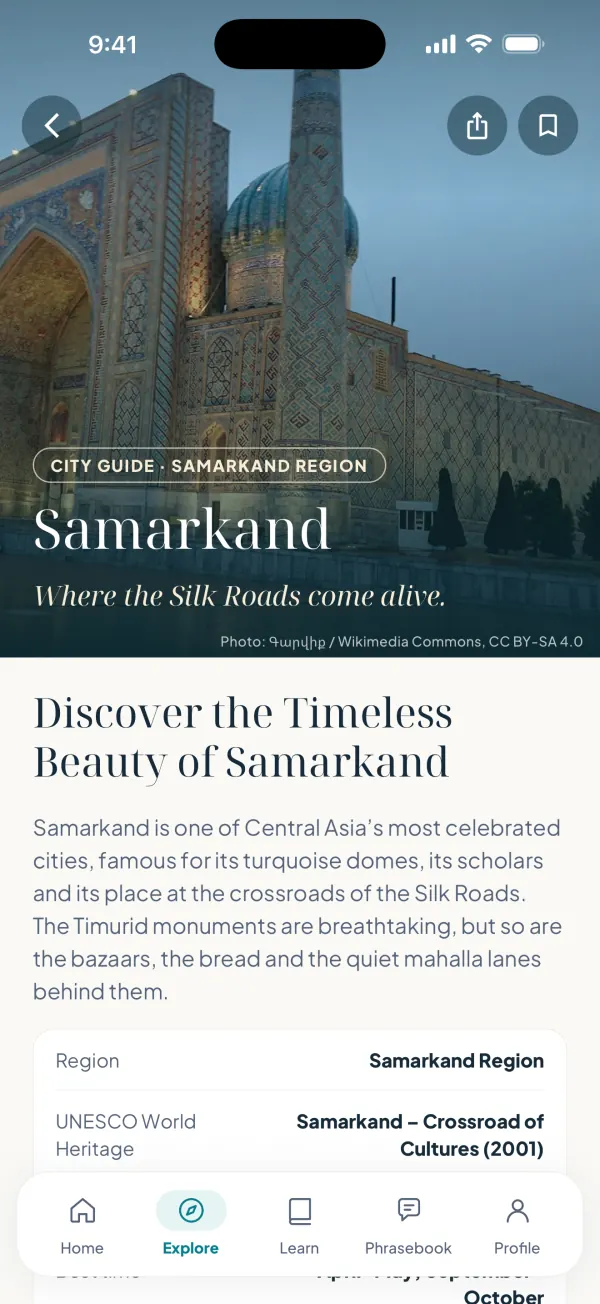
Salom Uzbekistan app: the Samarkand city guide
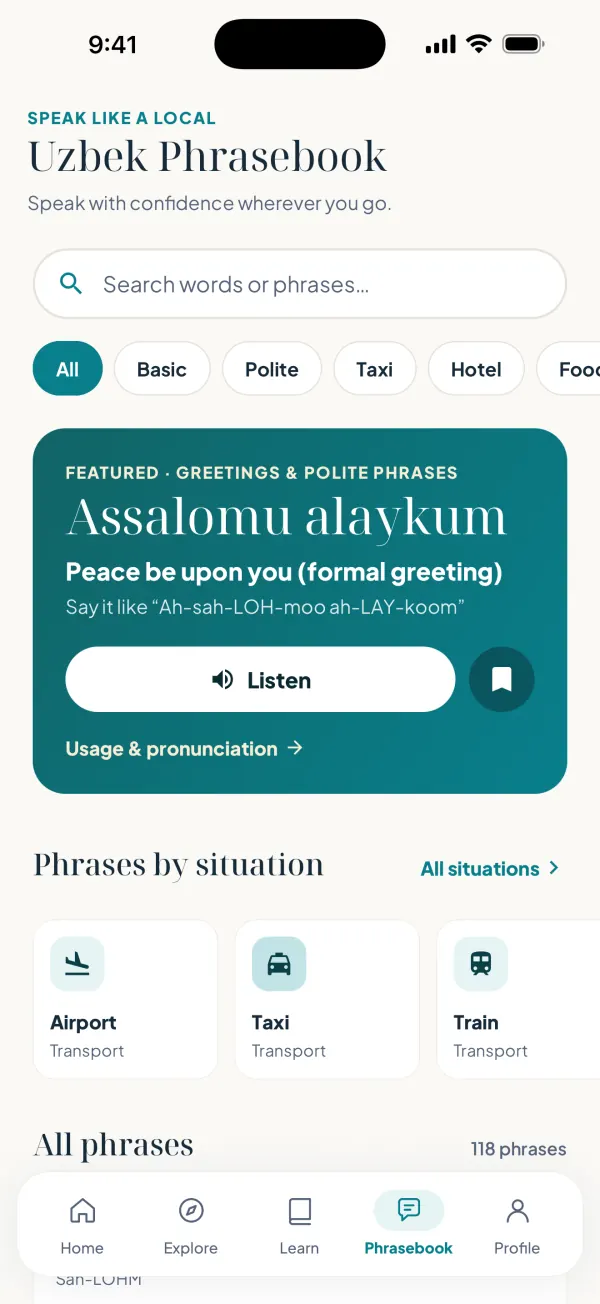
Salom Uzbekistan app: the Uzbek phrasebook with audio