Money in Uzbekistan: Cash, Cards & ATMs
How money in Uzbekistan works: the som and big-number cash, where cards actually work, an ATM strategy, and the scams to skip. A practical 2026 guide.
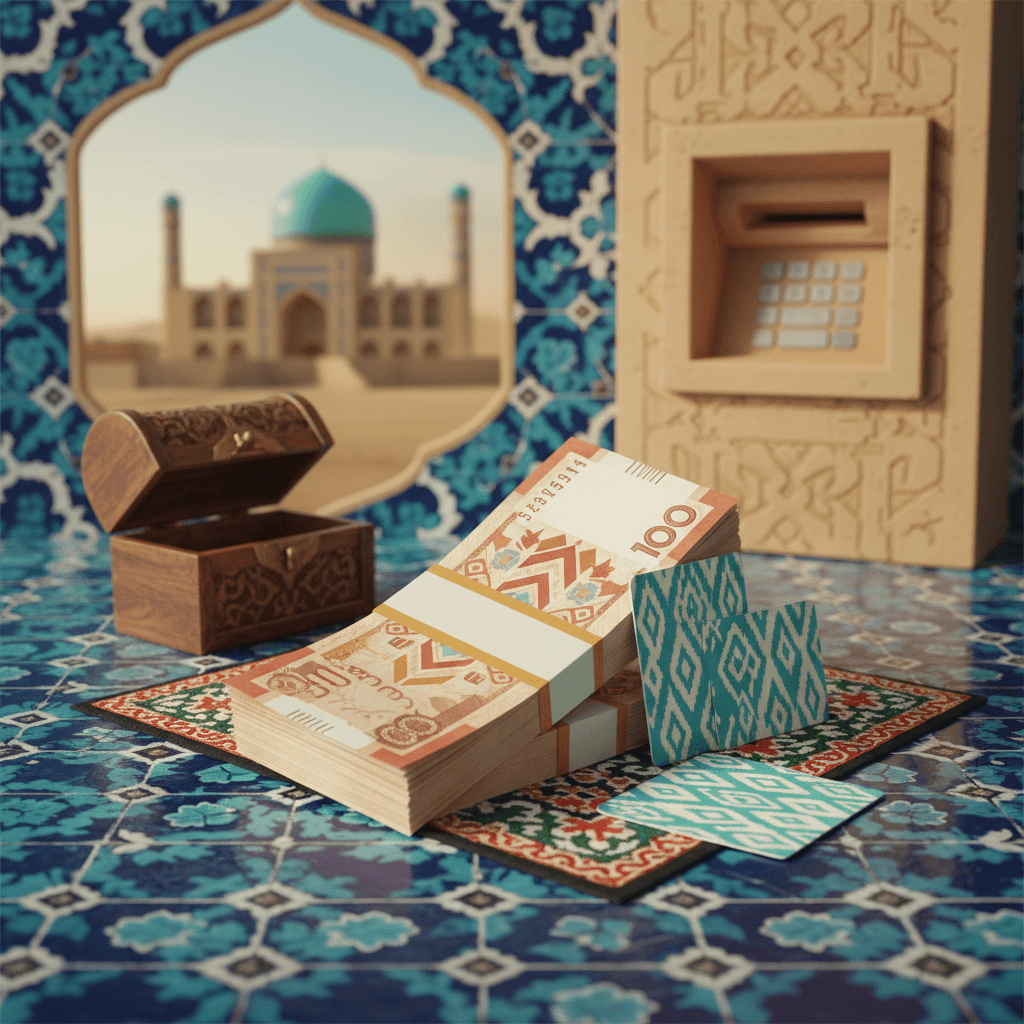
Handling money in Uzbekistan used to mean fat bricks of near-worthless notes and shady men whispering exchange rates on street corners. That era is done. The currency floats freely now, ATMs are common in cities, and cards work in more places every year.
Still, this is a cash-first country once you leave the hotel lobby. Here’s how to carry money, where your card actually works, and the small tricks that keep you from overpaying.
The Uzbek som and its big numbers
The local currency is the so'm suhm (som), and you’ll deal in large figures. A modest lunch can run into the tens of thousands, a taxi ride across town well into six digits. Don’t panic at the zeros. It just takes a day to get your eye in.
The biggest note in wide circulation is worth a fair bit, so you won’t need a shoebox of cash anymore. But small purchases still produce a wad of notes, and vendors sometimes struggle to break large bills. Keep a mix of denominations.
One habit worth forming early: count your change. Not because everyone’s out to cheat you, but because the zeros make honest mistakes easy on both sides.
Can you use cards in Uzbekistan?
Yes, in the right places. Card acceptance has grown fast, and Visa and Mastercard now work at most hotels, larger restaurants, malls, supermarkets, and airline offices. Terminals are normal at that level.
Where cards fail you:
- Bazaars and street stalls. Chorsu, Siyob, spice sellers, souvenir vendors. Cash only, almost always. See our shopping guide for how bargaining actually goes.
- Taxis. Whether you flag one or book through an app, expect to pay cash. More on that in the taxi guide.
- Small cafés, teahouses, family-run spots. The plainer the place, the more likely it’s cash.
- Rural areas and small towns. Card infrastructure thins out fast outside the big cities.
So the honest answer to “cash or card in Uzbekistan” is both, weighted toward cash. Put your big fixed costs (hotel, some sit-down meals) on the card, and keep enough som on you for everything else in a given day.
ATMs in Uzbekistan: the withdrawal strategy
ATMs are your friend here, and they’ve multiplied. In Tashkent, Samarkand, Bukhara, and Khiva you’ll find them at banks, malls, and larger hotels.
A few things to know before you tap your card:
- Look for Visa/Mastercard logos. Not every machine takes foreign cards, so check the front before you queue. Bank-branch ATMs are the safest bet.
- Some machines dispense USD, others som. Many bank ATMs let you withdraw US dollars, which is genuinely useful for stashing an emergency reserve. For day-to-day spending, take out som.
- Fees add up. Expect your home bank’s foreign-withdrawal fee plus, sometimes, a local charge. Pull out a larger amount less often rather than small sums daily.
- Empty machines happen. ATMs occasionally run dry, especially on weekends and holidays. Don’t leave withdrawing your last day’s cash until the last minute.
Withdraw at the airport if you land with nothing, then top up properly at a bank ATM in town. Our airport guide covers the arrival routine.
Changing money the safe way
Skip the guys offering “better rates” near bazaars and tourist sites. The black-market premium that made them worth the risk vanished when the som was freed. Now they exist mainly to shortchange tourists.
Use banks and licensed exchange desks, or just use ATMs. If you’re bringing cash from home, crisp US dollars get the cleanest treatment. Torn, marked, or older-series notes are sometimes refused or discounted, so bring clean bills.
A polite Kechirasiz keh-chee-rah-SIZ (excuse me) opens most counters, and Rahmat rah-MAHT (thank you) closes the transaction warmly.
Common money scams and how to dodge them
Uzbekistan is a low-crime place for travelers, and most vendors are straight with you. The money problems that do come up are small and preventable.
Wrong change. The most common one. With so many zeros, a vendor can hand back too little and blame the confusion. Count it in front of them, calmly. If something’s off, a quiet Bu qancha? boo kahn-CHAH (how much is this?) and pointing at the notes usually sorts it out.
Dodgy street exchangers. Covered above. Just don’t. You won’t get a real bargain, and the sleight-of-hand is practiced.
Taxi rounding and “no change.” Some drivers claim they can’t break your note and keep the difference. Carry small bills so you can pay close to the exact fare.
None of this should make you tense. Treat cash the way you would in any unfamiliar country: pay attention during the handover, and you’ll be fine.
A simple money plan for your trip
Here’s what works for most travelers:
- Bring some clean US dollars as backup, plus a Visa or Mastercard.
- Withdraw som from a bank ATM on arrival, enough for a few days.
- Pay hotels and bigger restaurants by card; keep daily-spending cash for taxis, bazaars, and small cafés.
- Keep a mix of note sizes and count your change.
- Never change money on the street.
Do that and money stops being a thing you think about, which is the whole point.
Frequently asked questions
Should I bring cash or use cards in Uzbekistan?
Bring both. Cards work at hotels, malls, and larger restaurants, but bazaars, taxis, and small cafés are cash only, so you’ll rely on som for daily spending.
Are there ATMs in Uzbekistan that accept foreign cards?
Yes. ATMs at banks, malls, and larger hotels in the main cities usually accept Visa and Mastercard. Check for the logos, and prefer machines inside bank branches for reliability and safety.
What currency is used in Uzbekistan?
The Uzbek som. You’ll deal in large numbers, so keep a mix of note sizes and count your change during every transaction.
Can I still change money on the black market?
There’s no point. Since the som was floated, street exchangers offer no real advantage and are mostly a shortchanging risk. Use banks, licensed desks, or ATMs.
How much cash should I carry each day?
Enough for taxis, meals at smaller spots, bazaar shopping, and tips, then a little buffer. Keep the rest for card payments and top up from an ATM every few days.
Want the money phrases in your pocket, ready even without signal? The Salom Uzbekistan app has offline audio for numbers, prices, and polite exchanges, so counting your change in so'm suhm feels natural by day two.