Things to Do in Samarkand: A 2-Day Plan
The best things to do in Samarkand over two days: the Registan, Shah-i-Zinda, Gur-e-Amir, Bibi-Khanym, and Siyob Bazaar, with timing for good light.
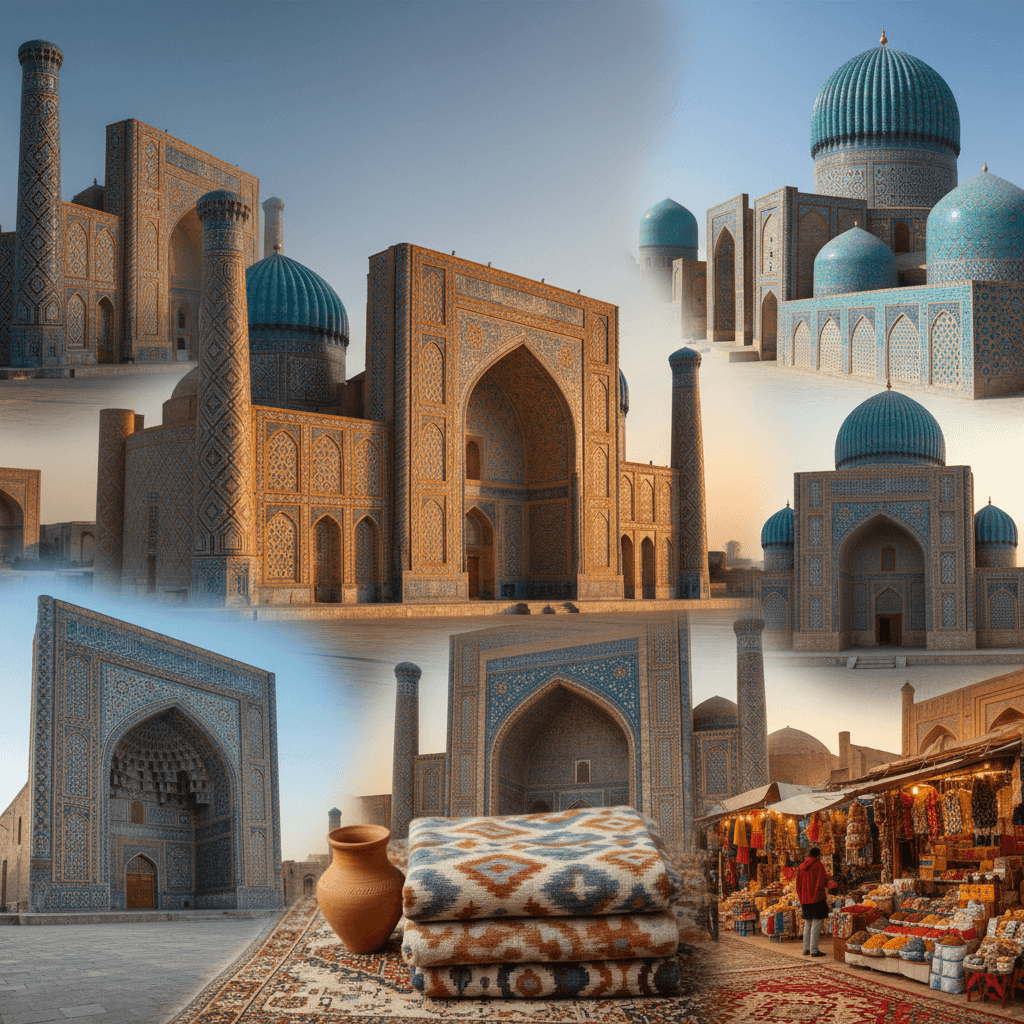
Samarkand rewards you for slowing down. Most of the best things to do in Samarkand sit within a 20-minute drive of each other, but rushing them flattens the whole city into one blue blur of tile.
So here’s a two-day plan that spaces out the big sites, chases the best light for photos, and ties everything back to one man: Amir Temur, the 14th-century conqueror Europe called Tamerlane. He made Samarkand his capital, and nearly every monument you’ll photograph was built by him or his descendants.
The fastest answer: what to see in Samarkand
If you only had a checklist, it would be these five Samarkand attractions:
- The Registan: three madrasahs around a public square, the city’s signature view
- Shah-i-Zinda: a narrow avenue of tombs covered in mosaic
- Gur-e-Amir: Temur’s own mausoleum, with the ribbed turquoise dome
- Bibi-Khanym Mosque: a giant, half-ruined Friday mosque
- Siyob Bazaar: the working market next to Bibi-Khanym, best for bread and dried fruit
Two days is enough to see all five without feeling like you’re sprinting. Here’s how I’d split them.
Day 1: the Registan, Gur-e-Amir, and golden hour
Start at the Registan early, ideally right when it opens. The square gets crowded by mid-morning, and soft morning light hits the eastern madrasah (Sher-Dor, the one with the tigers and suns) without the harsh contrast you’ll fight at noon.
The three buildings went up across two centuries. Ulugh Beg, Temur’s grandson and an astronomer, built the oldest one in the 1420s. He taught math here, which is unusual for a madrasah of the time.
Give it two hours. Climb a minaret if a guard offers (there’s usually an informal fee), and go inside the courtyards, where most of the detail hides.
Walk or take a short taxi to Gur-e-Amir for late morning. This is where Temur is buried, along with sons and Ulugh Beg. The interior is small but dense: gilded walls, a single dark jade slab over the crypt. It’s quieter than the Registan, so it’s a good midday stop when the sun is too high for outdoor photos anyway.
Break for lunch. You’re in the home of plov, and Samarkand’s version is drier and more layered than Tashkent’s, often topped with chickpeas and a wedge of yellow carrot. Pair it with non, the round bread that locals treat with real respect (never put it upside down).
In the afternoon, rest. Seriously. The heat from May to September is no joke, and you want energy for the evening.
Come back to the Registan around sunset. The facades glow, the crowds thin, and on most nights there’s a light show after dark. If you only get one photo in Samarkand, this is probably it.
A phrase that helps with taxi drivers between sites: Registonga boring reg-iss-TON-ga bo-RING (go to the Registan).
Day 2: Shah-i-Zinda, Bibi-Khanym, and Siyob Bazaar
Go to Shah-i-Zinda first thing. This one matters for light: it’s a tight north-south lane of tombs, and the tilework reads best when the sun is low and slanting in rather than blasting straight down. Morning is your friend here.
The name means “the living king,” tied to a cousin of the Prophet Muhammad said to be buried at the top of the hill. Pilgrims still come. The tombs span centuries, and the blues shift from one doorway to the next: cobalt, turquoise, a deep almost-purple. Walk the whole avenue and back; the light changes the colors on the return trip.
It’s an active religious site, so dress modestly. A scarf for the head isn’t required to enter the lane but is appreciated at the working shrine. Worth reading up on mosque etiquette before you go.
From there it’s a short walk to Bibi-Khanym Mosque. Temur built it after his campaign in India, supposedly the largest mosque of its day. Much of it collapsed over the centuries and parts have been rebuilt, so it has a half-finished, weathered grandeur the polished sites lack. The scale is the point: stand under the main portal and look up.
Then step straight into Siyob Bazaar, right next door. This is the food market locals actually use. Try the round Samarkand non (bakers stamp the centers with a tool called a chekich che-KEECH ), and graze on dried apricots, almonds, and halva. Vendors will hand you samples; it’s normal.
A little language goes a long way at the stalls. Qancha? kan-CHA means “how much?” and Rahmat rah-MAHT (thank you) earns you a smile every time. If you want to bargain, do it lightly and with humor. Our bazaar etiquette guide has the rhythm of it.
Spend your last afternoon however you like. The Ulugh Beg Observatory, on the edge of town, is a good add for anyone curious about that astronomer-prince. Or just go back to a site you loved at a different hour.
How the pieces fit: one family, one city
What makes a Samarkand itinerary feel coherent is the through-line. Temur built Bibi-Khanym and Gur-e-Amir. His grandson Ulugh Beg built a Registan madrasah and the observatory. The Sher-Dor and Tilya-Kori madrasahs came later under the Shaybanids, who copied the Timurid style.
So you’re not seeing five unrelated monuments. You’re watching one dynasty’s taste develop across roughly 200 years, mostly in the same blue.
Practical timing notes
- Best light: Registan at sunset, Shah-i-Zinda in the morning. Reverse them and you’ll fight glare.
- Heat: July and August are brutal by midday. Plan indoor or shaded stops from roughly noon to 4 pm. See our month-by-month guide for the easier seasons.
- Getting around: Most sites are a cheap taxi ride apart. Agree on the fare before you get in, or use the Yandex app. Our taxi survival page covers the phrases.
- Tickets: Buy at each site’s entrance. Carry small bills.
Frequently asked questions
How many days do you need in Samarkand?
Two full days covers the main attractions without rushing. One day works if you stick to the Registan, Gur-e-Amir, and Shah-i-Zinda and skip the bazaar browsing.
What is the must-see attraction in Samarkand?
The Registan, the square framed by three madrasahs. It’s the image most people associate with the city, and it’s best at sunset.
Is Samarkand walkable?
The core sites cluster together, and Shah-i-Zinda, Bibi-Khanym, and Siyob Bazaar are an easy walk from one another. For the Registan and Gur-e-Amir, a short taxi saves your legs in the heat.
Do I need to cover up at Samarkand’s mosques?
Dress modestly at active religious sites like Shah-i-Zinda: shoulders and knees covered, and a light scarf for women is appreciated at the working shrine. Most monuments are relaxed about it.
Is Samarkand worth visiting over Bukhara or Khiva?
Yes, and ideally you’d see all three. Samarkand has the grandest single monuments; Bukhara feels more like a lived-in old town, and Khiva is a walled museum-city.
If you’d rather not fumble for words at the bazaar or with a taxi driver, the Salom Uzbekistan app has offline Uzbek phrases with audio you can play on the spot. Download it before your trip and keep it in your pocket.