Best Time to Visit Uzbekistan: A Month Guide
The best time to visit Uzbekistan is spring and autumn. Here's Uzbekistan weather by month, plus when to visit Samarkand, Bukhara, and Khiva.
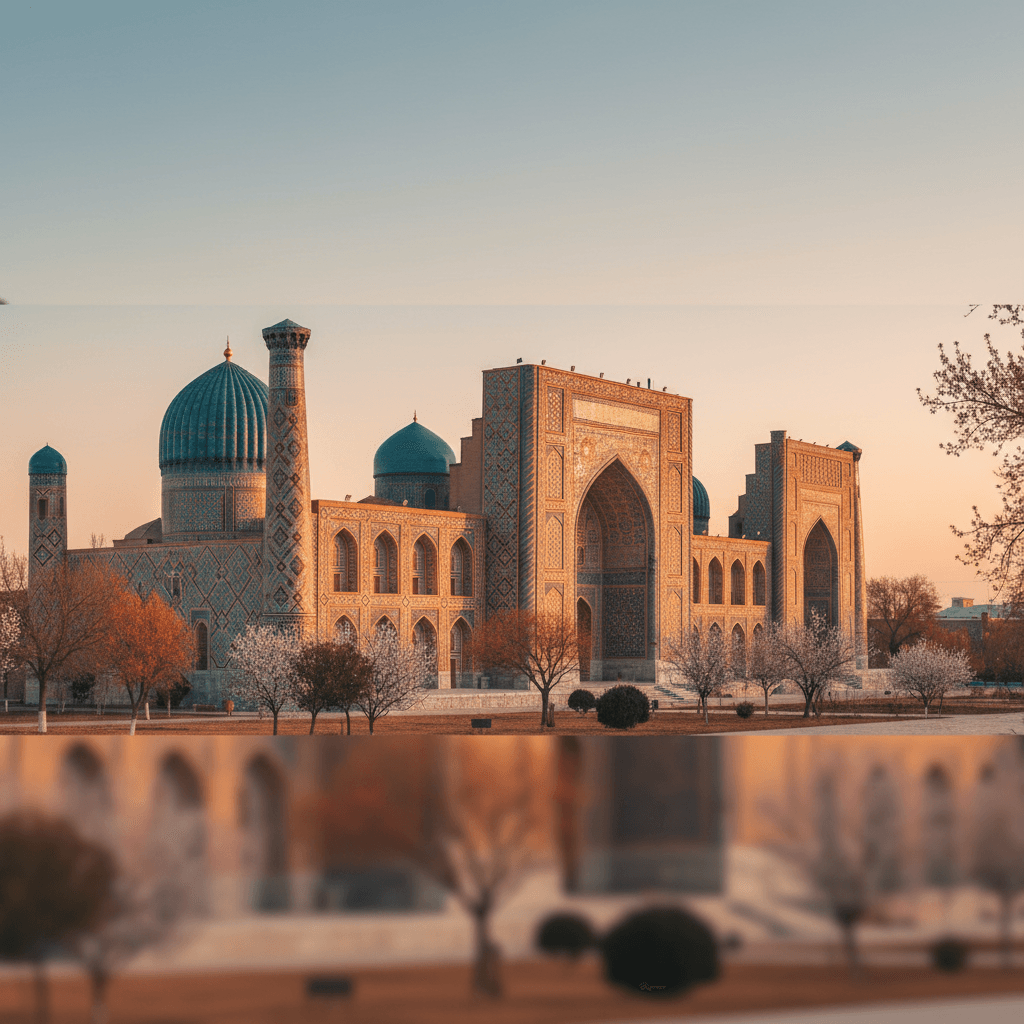
The best time to visit Uzbekistan is spring (April to May) or autumn (September to October). The weather is mild, the desert cities aren’t trying to cook you, and the gardens around the monuments are actually green.
That’s the short answer. But the right month depends on what you’re after, how much heat you can take, and whether you want crowds or quiet. Here’s how the year breaks down.
When to visit Uzbekistan: the quick verdict
- Spring (Apr–May): the sweet spot. Warm days, cool evenings, blossoms and roses around the madrasas.
- Autumn (Sep–Oct): nearly tied with spring, plus melon season and lighter crowds.
- Summer (Jun–Aug): brutal in Samarkand, Bukhara, and Khiva. Easily 40°C+ in the shade.
- Winter (Dec–Feb): cheap, quiet, occasionally magical with snow on the tilework. Cold and short on daylight.
If you can only travel once, aim for late April or early October.
Uzbekistan weather by month
Uzbekistan has a sharp continental climate. Big swings between day and night, dry air most of the year, and very little rain once summer starts.
Spring (March to May)
March starts chilly and unpredictable. By late March, days warm up fast. April and May are genuinely lovely: daytime highs in the low-to-mid 20s°C, clear skies, and the courtyards at the Registan Square framed by green.
This is also when the country celebrates Navruz on March 21, the Persian new year and a public holiday. Expect music, big communal pots of sumalak soo-mah-LAK (a slow-cooked wheat dish), and a festive mood in the squares. If you want one cultural moment to time your trip around, this is it. Just book ahead, since locals travel too.
Summer (June to August)
Hot. Then hotter. July and August routinely push past 40°C in the lowland cities, and the desert sun in Khiva and Bukhara is relentless by midday.
You can still travel in summer if you plan around the heat: sightsee early, retreat to shade and tea by 1 p.m., go out again after 5. The upside is long daylight and thinner crowds at some sites. Hotels and tours sometimes drop prices too.
If you’re set on summer, head up. The Chimgan mountains east of Tashkent stay far cooler and make an easy escape from the city.
Autumn (September to October)
September cools off gradually, and October is close to perfect. Mild, dry, and golden. This is melon and grape season, so the bazaars are at their best. A slice of cold melon after a hot afternoon is one of the small pleasures of an Uzbek autumn.
By late October nights turn cold, and November tips toward winter. Pack layers.
Winter (November to February)
Winters are cold, with daytime highs often near freezing and the odd snowfall. Daylight is short, and some smaller guesthouses in Khiva scale back.
The trade-off is real, though. Prices drop, crowds vanish, and a dusting of snow on the blue domes of Shah-i-Zinda is something most travelers never see. Bring a proper coat and you’ll have the monuments nearly to yourself. A warm bowl of shurpa or lagman hits differently when it’s cold out.
What each season means for Samarkand, Bukhara, and Khiva
The three Silk Road cities sit in the hot lowlands, so they share a climate. But they don’t all feel the same.
Samarkand
Samarkand is the most forgiving of the three in shoulder season because it has trees, parks, and a bit of elevation. Spring and autumn are ideal for lingering at the Registan and the Gur-e-Amir Mausoleum without rushing for shade.
Bukhara
Bukhara is drier and more exposed. Summer afternoons around the Po-i-Kalyan are tough, with the stone and brick radiating heat. The pools at Lyab-i-Hauz and a teahouse table are your friends. April, May, September, and October are the comfortable windows.
Khiva
Khiva sits on the edge of the Kyzylkum desert, so it has the most extreme swings: scorching summers, genuinely cold winters. The walled city of Itchan Kala is compact and largely shadeless at midday. Visit in spring or autumn, and start early.
Shoulder-season trade-offs
“Shoulder season” here means roughly March and November: the edges of the good months.
- Late March: Navruz energy and cheaper rates, but weather is a gamble. Some warm days, some cold rain.
- November: crisp, quiet, low prices, and short days. Fine if you don’t mind cold mornings and earlier sunsets.
Both can be rewarding if you pack for variable weather and keep your plans flexible. A useful phrase when the forecast turns: Bugun ob-havo qanday? boo-GOON ob-hah-VO kahn-DAY (What’s the weather like today?).
A few practical notes
Whatever month you choose, the air is dry, so drink more water than you think you need. In summer especially, carry a bottle and refill it.
Flights into Tashkent often land late at night. Knowing a couple of phrases helps when you’re tired and a taxi driver quotes you a fare, so it’s worth reading our airport survival guide before you go. A simple Rahmat rah-MAHT (thank you) goes a long way at any hour.
And if you’re timing the trip around food, autumn’s harvest is hard to beat. Our guide to 13 dishes to eat in order pairs well with a plov lunch on a cool October afternoon.
Frequently asked questions
What is the best month to visit Uzbekistan?
Late April, May, September, and early October are the best months. You get warm, dry days, comfortable evenings, and the monuments without summer’s punishing heat.
Is summer too hot to visit Uzbekistan?
It’s hot but doable if you plan around it. Sightsee early and late, rest through the afternoon, and consider cooler spots like the Chimgan mountains. Expect highs above 40°C in Bukhara and Khiva in July and August.
When is Navruz in Uzbekistan?
Navruz falls on March 21 every year. It’s a public holiday with festivals, music, and communal cooking, so book travel and accommodation early if you want to be there for it.
Is winter a bad time to visit Uzbekistan?
Not at all, just cold and quiet. You’ll find lower prices, almost no crowds, and the chance of snow on the blue domes. Pack a warm coat and accept shorter days.
What’s the best time to visit Samarkand specifically?
April to May and September to October. Samarkand’s parks and slight elevation make it pleasant in shoulder season, and the light on the tilework is at its softest then.
Whichever season you pick, a handful of Uzbek phrases makes the trip warmer. The Salom Uzbekistan app has offline phrases and audio you can use the moment you step off the plane, no signal required.