Uzbekistan Food: 13 Dishes to Eat (In Order)
A traveler's guide to Uzbekistan food: plov, somsa, lagman, shashlik, manti, non, and tea. What each dish is, where to try it, and one ordering tip each.
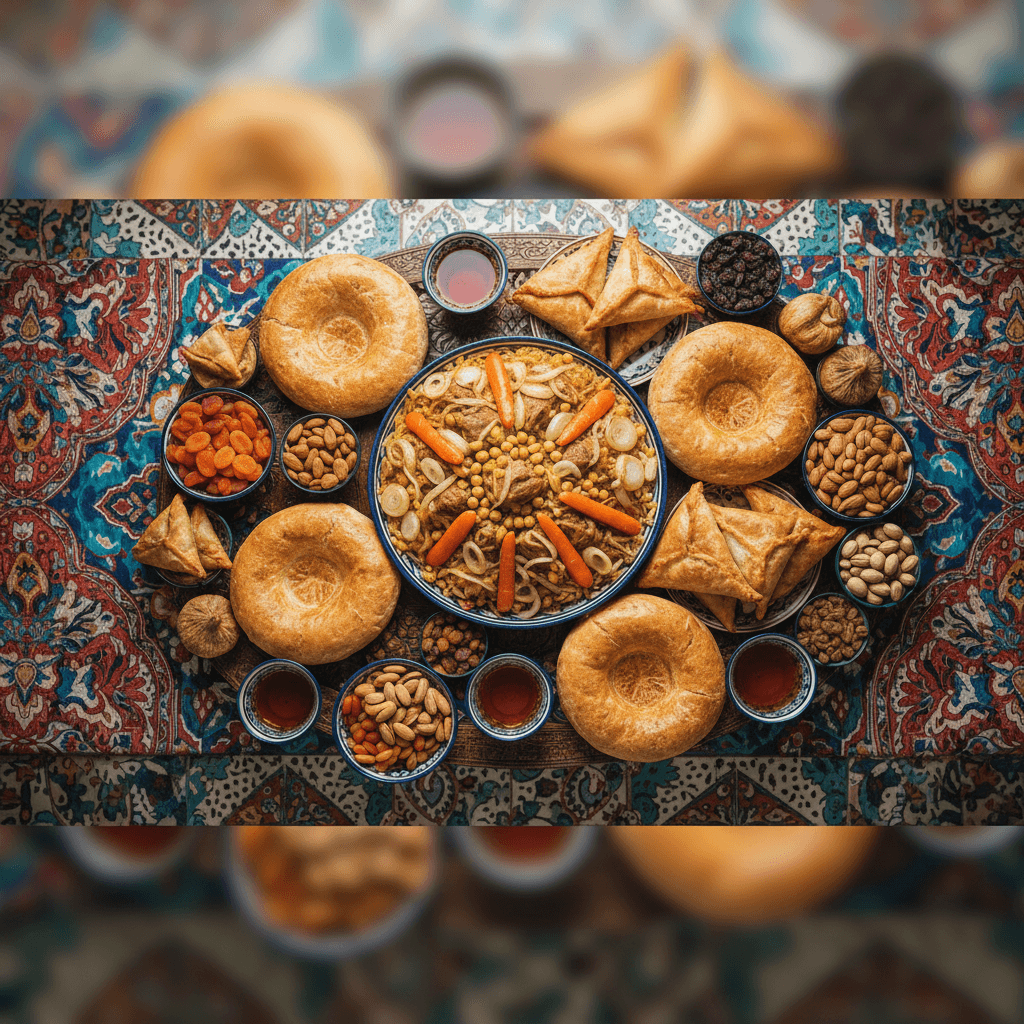
Uzbekistan food is meat, bread, rice, and tea, repeated in dozens of forms across a long lunch table. Most of it is generous, slow-cooked, and built to be shared.
Here are the dishes you’ll actually meet, roughly in the order they’ll find you: at the bazaar, at a roadside grill, at someone’s home. What each one is, where to try it, and one tip so you order like you’ve done this before.
The first thing you’ll eat: non (bread)
Before any dish arrives, there’s bread. Non nawn is a round, dense flatbread stamped with a pattern in the center and baked against the wall of a clay tandir tahn-DEER oven. Samarkand non is the famous one, heavy and slightly chewy.
Never put it upside down on the table. That’s considered disrespectful, and locals will quietly flip it back. Tear it by hand and share it. Read more on non if you want the regional differences.
Plov, the dish everything else orbits
If you eat one thing in the country, eat Osh awsh (also called Plov plawf ). It’s rice cooked in a wide cast-iron qozon kah-ZAWN with lamb, carrots, onion, and often chickpeas, raisins, or a whole head of garlic.
Eat it at lunch, not dinner. Plov is traditionally a midday meal, and a good plov house (an oshxona awsh-haw-NAH ) cooks one giant batch in the morning and sells until it runs out. Show up at 12 or 1, not 8pm.
In Tashkent, the Central Asian Plov Center is the obvious stop. Every region cooks it differently. Full breakdown on the plov page.
Somsa, the thing in your hand by 10am
Somsa sawm-SAH is a baked pastry stuffed with minced meat and onion (or pumpkin in autumn), cooked stuck to the tandir wall so the bottom goes crisp. You’ll smell them before you see them.
Buy them straight from the oven at a bazaar like Chorsu Bazaar. Tip: ask for go'shtli somsa gawsht-LEE sawm-SAH (meat) and check whether it’s lamb or beef if that matters to you. Let it cool for a minute. The filling is molten. See the samsa guide for the pumpkin version, which is underrated.
Shashlik, the smell of every evening
Shashlik shash-LEEK is skewered meat grilled over coals: lamb, beef, sometimes chicken or minced kebab. This is dinner food, and the smoke drifting down a street at dusk is doing the advertising.
Order by the skewer, not by weight, unless the menu says otherwise. Two or three skewers per person with bread and salad is plenty. Ask for the lamb if you want the classic. Shashlik details here.
Lagman, the noodle you’ll crave on a cold day
Lagman lahg-MAHN is hand-pulled wheat noodles in a brothy stew of mutton, peppers, tomato, and onion. It’s filling without being heavy, which makes it a good first meal after a long bus ride.
There are two styles: soupy lagman and fried ( quruq lagman koo-ROOK lahg-MAHN ), which has less liquid. If you want the noodle soup, say suvli soov-LEE (watery). More on the lagman page.
Manti, the dumpling worth the wait
Manti mahn-TEE are large steamed dumplings filled with chopped meat and onion, sometimes pumpkin. They take a while to steam, so order them early in the meal.
Eat them with your hands or a fork, but don’t stab the dumpling and lose the juice inside. Bite a small opening first. A spoonful of qatiq kah-TEEK (tart yogurt) on top is the local move. See manti.
Shurpa and dimlama, the slow-cooked comfort food
Shurpa shoor-PAH is a clear lamb-and-vegetable soup with big chunks of potato, carrot, and bone-in meat. It arrives scalding. Shurpa here.
Dimlama deem-lah-MAH is a layered stew of meat and vegetables cooked low and slow with almost no added water. Both are home-style dishes, so you’ll find them best at family-run spots rather than tourist restaurants. See dimlama.
Chuchvara and naryn, the regional ones
Chuchvara chooch-vah-RAH are tiny dumplings served in broth or fried, like a smaller, soupier cousin of manti. Good when you want something lighter. Chuchvara.
Naryn nah-REEN is a Tashkent specialty: chopped boiled noodles tossed with horse meat and onion, served cold-ish. It’s an acquired taste and a real one to try if you want food that isn’t on the tourist circuit. Naryn.
Sweets: halva and the fruit you didn’t expect
Uzbek holva hawl-VAH is a dense, sweet confection made with flour, sugar, and oil or nuts, sold in slabs at the bazaar. Buy a small piece first. It’s very sweet and a little goes a long way.
The real sweet surprise is the fruit. Melons, apricots, figs, and grapes in summer are some of the best you’ll eat anywhere, and dried apricots and raisins fill whole sections of the markets.
Tea, the thread through the whole meal
Green tea ( ko'k choy kook choy ) shows up before, during, and after everything. Pouring it is a small ritual: your host pours a little into a bowl, tips it back into the pot, and repeats three times before serving. That back-and-forth blends the brew so every cup pours the same strength.
A half-full bowl is a sign of respect, oddly enough. It means your host wants to keep refilling you and stay close. Don’t ask for a brimming cup. There’s a whole tea culture worth reading before your first home visit.
If you get invited to eat in someone’s home, that’s the best food you’ll find. A few notes on Uzbek hospitality will help you not embarrass yourself.
Frequently asked questions
What is the national dish of Uzbekistan?
Plov ( osh awsh ), a rice dish with lamb, carrots, and onion cooked in a large cast-iron pot. It’s eaten at lunch, at weddings, and pretty much any time worth celebrating.
Is Uzbek food spicy?
Usually no. Traditional Uzbek dishes lean on cumin, coriander, and slow-cooked meat rather than chili heat. You’ll find chili paste on the table at some places if you want to add it yourself.
What should vegetarians eat in Uzbekistan?
It’s meat-heavy, so plan ahead. Pumpkin somsa, vegetable dimlama, bread, salads, and fresh fruit are reliable. Ask go'shtsiz gawsht-SEEZ (without meat), and check the food survival guide for phrases that help.
Where do I find the most authentic Uzbek cuisine?
Plov houses at lunchtime, bazaars for somsa and bread, and family homes if you’re lucky enough to be invited. Tourist restaurants are fine but rarely the best version of anything.
Want the ordering phrases ready before you’re standing at a noisy bazaar stall? The Salom Uzbekistan app has them offline, with audio so you can hear how go'shtli somsa gawsht-LEE sawm-SAH actually sounds. Grab it here and point-and-order with confidence.