Uzbek Plov: The National Dish Explained
What uzbek plov really is, the qozon and oshpaz ritual, regional styles, and where and when to eat it on your trip. A traveler's guide to osh palov.
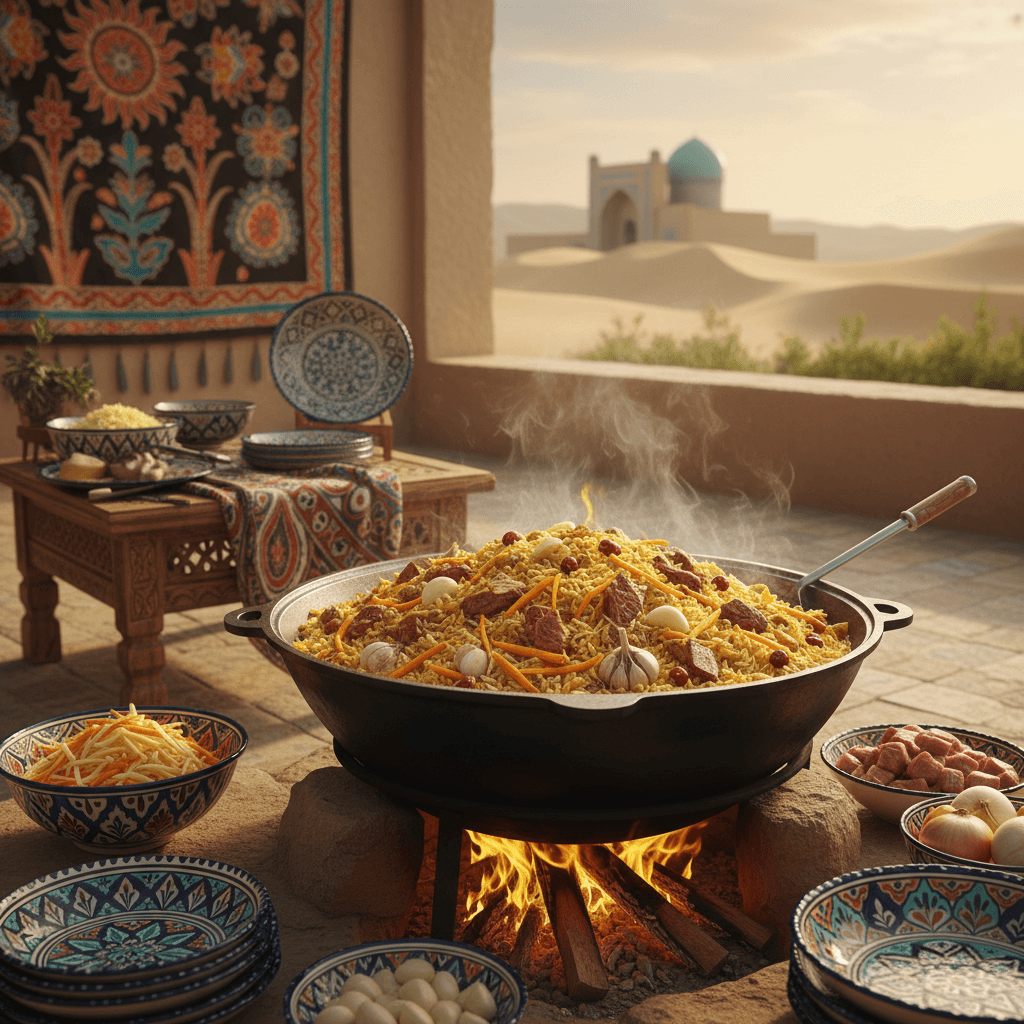
Ask an Uzbek what to eat first and the answer comes fast: plov. This rice dish is the center of gravity for celebrations, Thursday lunches, and just about every reason families gather around a table.
Uzbek plov goes by a few names. You’ll hear osh OHSH in Tashkent and palov pah-LOV elsewhere, sometimes strung together as osh palov. Whatever the label, it’s rice cooked with carrots, onions, meat, and oil in one heavy pot until each grain stands separate and glossy.
What is uzbek plov, exactly?
At its simplest, plov is rice braised with lamb or beef, yellow and orange carrots cut into matchsticks, onions, and plenty of oil or rendered fat. The carrots melt into sweetness, the meat goes tender, and the rice soaks up all of it.
Good plov isn’t soupy or sticky. The grains should be firm and distinct, the color somewhere between gold and amber. Cooks build flavor with cumin, whole heads of garlic pressed into the rice, and sometimes chickpeas, barberries, or raisins.
It’s filling in a way that surprises first-timers. One plate is usually lunch, and lunch is usually when locals eat it. Plov is heavy, so most families serve it midday rather than at night.
The qozon and the oshpaz
Real plov needs a qozon kah-ZON , a wide cast-iron cauldron set over fire. The shape matters. The curved sides let the rice steam evenly while the meat and carrots stay submerged in fat at the bottom.
The person at the qozon is the oshpaz OHSH-paz , the plov master. At weddings and big events this is often a man with decades of practice, cooking for a hundred people or more in a single pot the size of a bathtub.
Watching an oshpaz work is half the experience. There’s an order to everything: sear the meat, soften the onions, layer the carrots, add water and spices to make the zirvak zeer-VAHK (the savory base), then rest the soaked rice on top and let steam do the rest. He never stirs it all together until the end.
The ritual carries weight. Cooking plov for guests is a form of respect, tied closely to Uzbek hospitality and the idea that feeding someone well is how you honor them.
Regional plov: Tashkent, Samarkand, Fergana
There’s no single uzbek pilaf. Every region argues its own version is the right one, and they’re all a little correct.
Tashkent plov
The capital’s style is darker and richer, often cooked with soy-tinged depth and served with the rice and toppings mixed before it reaches you. Tashkent plov tends to pile on extras: qazi kah-ZEE (horse meat sausage), quail eggs, chickpeas, and raisins. It’s the showy, generous version.
Samarkand plov
Samarkand keeps things lighter and layered. The rice stays pale, the carrots sit on top rather than mixed through, and the meat is laid over the lot when serving. Many travelers find it the gentlest introduction. If you’re touring Registan Square at midday, this is what you’ll likely be handed.
Fergana plov
The Fergana Valley version, sometimes called qovurma palov kah-voor-MAH pah-LOV , uses devzira rice, a reddish, dense grain that drinks up fat and holds its shape. It’s earthy and robust, and a lot of cooks consider it the original. If you only try one regional style for the contrast, make it this one.
Beyond these three you’ll meet wedding plov, student plov, and plov with quince or dried apricot. The base idea stays constant; the details shift village by village.
Where and when to eat plov
Timing helps. Plov is a lunch dish, and the best pots sell out by early afternoon. Show up at noon, not 3pm.
The Central Asian Plov Centre in Tashkent is the obvious pilgrimage. Giant qozons line up out front, oshpaz crews work them from morning, and you order by the portion. Go early. The good rice from the bottom of the pot disappears first, and once a qozon is empty, that’s it for the day.
Thursdays have a quiet tradition behind them. In many families Thursday is plov day, sometimes tied to remembering the departed, so it’s a natural time to find it cooking everywhere. Markets like Chorsu Bazaar smell of cumin and frying onions by mid-morning.
Then there are weddings. If you’re invited to one, plov is guaranteed, and there may even be a dawn event called nahor oshi nah-HOR OH-shee (morning plov) served to guests before sunrise. It’s a serious honor to be asked, and worth reading up on weddings and rituals before you go.
Wherever you eat it, plov comes with sliced tomato-and-onion salad called achichuk ah-chee-CHOOK , fresh non bread, and green tea. The tea isn’t optional. It cuts the richness, and refusing it can feel abrupt, so learn a little about tea culture before your first meal.
How it comes together (a taste, not a recipe)
You don’t need to cook plov to appreciate it, but knowing the moves makes you a better diner.
The oshpaz starts with hot oil and browns the meat hard. Onions go in next, then the carrots, which cook down with cumin and salt into that zirvak base. Water covers it, garlic heads get tucked in, and it simmers.
Only then does the soaked rice go on top, spread flat, never stirred into the rest. The cook pokes holes for steam, lowers the heat, and covers the qozon. Twenty minutes or so later he flips the whole thing onto a platter, meat on top, and it’s served.
The non-stirring is the secret. Mix too early and you get mush. The layering is what gives uzbekistan plov its texture. For the full picture of the dish and its cousins, the plov page goes deeper.
Frequently asked questions
What is uzbek plov made of?
Rice, carrots, onions, meat (usually lamb or beef), and oil or fat, seasoned with cumin and garlic. Regional versions add chickpeas, raisins, barberries, quail eggs, or horse sausage.
Is osh palov the same as plov?
Yes. osh OHSH and palov pah-LOV are local names for the same dish; “plov” is just the most common spelling travelers see. Tashkent leans toward osh, other regions toward palov.
When is the best time to eat plov in Uzbekistan?
Lunchtime, ideally around noon, since the best pots sell out by early afternoon. Thursdays are traditional plov days, and the dish is a fixture at weddings and large gatherings.
Where can I try the most famous plov?
The Central Asian Plov Centre in Tashkent is the best-known spot, with rows of huge qozons cooked fresh each morning. Smaller eateries and bazaar stalls across the country serve excellent versions too.
Is plov spicy?
No. It’s savory and a little sweet from the carrots, with warmth from cumin rather than chili heat. It pairs with a fresh tomato-onion salad and green tea.
Want to order your plov, thank the oshpaz, and accept that second cup of tea without fumbling? Our Salom Uzbekistan app has offline Uzbek phrases with audio, so the right words are ready even when the wifi isn’t.