Uzbek Samsa, Manti & Lagman: The Everyday Trio
Beyond plov: what uzbek samsa, manti dumplings, and hand-pulled lagman actually are, their fillings, and where to find the best at bazaars and tandoors.
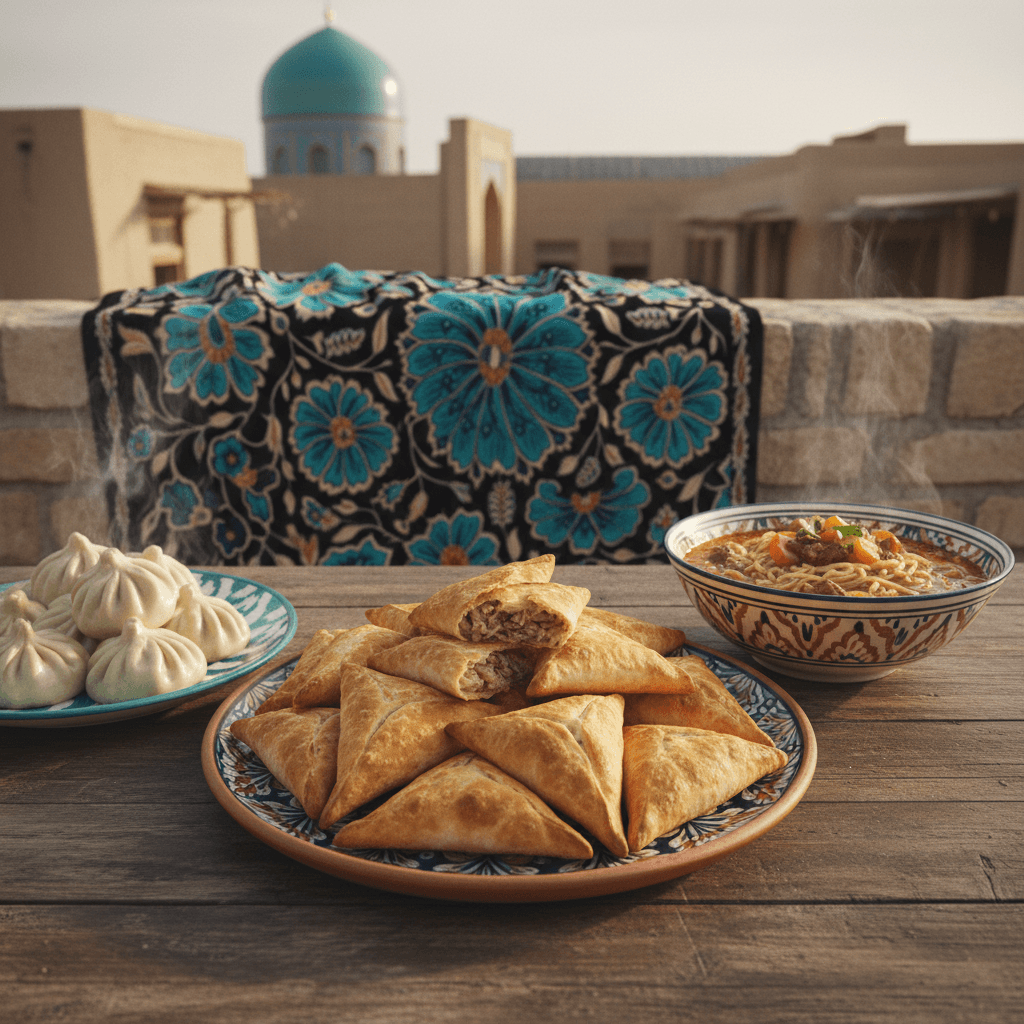
Everyone tells you to eat plov in Uzbekistan, and they’re right. But the food you’ll actually reach for between sights, the quick stuff sold from tandoors and bazaar stalls, is a different trio.
Uzbek samsa, manti, and lagman are the everyday backbone of eating here. Cheap, filling, and sold almost everywhere. Here’s what each one is and where to find the good versions.
What is uzbek samsa?
A samsa is a baked pastry parcel, roughly the size of your palm, stuffed with meat or vegetables and sealed into a triangle or a plump square. The dough goes crisp and blistered on the outside, and inside there’s a pocket of juice waiting to burn the roof of your mouth if you rush.
The best ones are tandoor samsa, slapped onto the wall of a clay oven called a tandir tan-DEER and baked until the bottom caramelizes. You’ll smell them before you see them.
The fillings
Meat samsa usually means lamb or beef, hand-chopped rather than ground, mixed with onion and fat so it stays moist. Ask for go'shtli somsa GOSHT-lee som-SAH if you want the meat version.
In autumn, look for pumpkin samsa, qovoqli somsa ko-vok-LEE som-SAH . The squash turns sweet and soft against the savory dough, and it’s one of the better vegetarian bites you’ll find in the country.
There’s a smaller flaky style too, made with layered puff-style dough instead of the dense tandoor kind. Both count as samsa. Try each and pick your side. More detail on the samsa varieties if you want to go deeper.
Where to find the best samsa
Bazaars are your safest bet, because the turnover is high and the oven never stops. At Chorsu Bazaar in Tashkent, follow the queue of locals rather than the sign with English on it.
Small neighborhood tandoors are often even better, and cheaper. A samsa fresh from the oven, eaten standing on the curb, beats any restaurant plate. If the vendor pulls it out in front of you, buy two.
Manti: the big steamed dumpling
Manti are large pleated dumplings, steamed rather than boiled, and they’re a proper meal, not a snack. Four or five of them will fill you up.
The filling is usually minced lamb or beef with plenty of onion, and sometimes a bit of pumpkin worked in for sweetness. The onion releases liquid as it steams, so each dumpling holds a mouthful of broth. Bite carefully.
They arrive topped with a spoon of qatiq kah-TIK (a tangy yogurt) or melted butter, sometimes both. Locals often add a shake of black pepper or a dab of chili. Say manti MAN-tee and hold up how many you want.
You’ll find manti in oshxona osh-kho-NAH (canteen-style eateries) all over the country, usually cooked in tall stacked steamers you can spot from the door. They’re a lunch food more than a dinner food, so go earlier rather than later.
Lagman: hand-pulled noodles
Lagman is the Central Asian noodle dish, brought here along the old trade routes and made local. The noodles are pulled by hand, stretched and slapped until they’re long and springy, then either served in a spiced broth or fried.
There are two main styles worth knowing. Soupy lagman comes in a bowl of broth with the noodles, chunks of meat, and vegetables like peppers, tomato, and radish. Fried lagman, sometimes called quyruq lagmon kwee-ROOK lag-MON , drains the broth and stir-fries everything together for a heavier, richer plate.
The broth is where a good cook shows off. Cumin, garlic, and a slow-built depth from the meat and vegetables. A weak lagman tastes watery. A great one tastes like it simmered all morning, because it did.
Uyghur-run spots often make the best versions, since the dish sits at the heart of their cooking. If you see someone pulling noodles by hand in the window, sit down.
How the three fit into a day
Here’s the honest rhythm most travelers fall into:
- Grab a tandoor samsa mid-morning between sights, eaten on the go.
- Sit down for manti or lagman at lunch, when they’re freshest and the steamers are full.
- Save the big plov experience for around midday too, since plov is traditionally a lunch dish.
All three are cheap by traveler standards, and none require a reservation or a plan. That’s the point of them.
A quick word on ordering. Portions are generous, so don’t over-order on your first go. And when it comes to Uzbekistan street food, the street tandoor and bazaar stall consistently outperform the tourist restaurant. Trust the smoke and the queue.
A few phrases that help
Pointing works, but a couple of words earn you a smile and sometimes a better dumpling. Ask Bu nima? boo nee-MAH (what is this?) at a stall you don’t recognize. Say Rahmat rah-MAHT (thank you) when they hand it over.
If you eat meat-free, go'shtsiz gosht-SEEZ means without meat, useful for finding the pumpkin samsa. For more table words, the food survival guide covers ordering and paying.
Frequently asked questions
What is the difference between samsa and manti?
Samsa is baked in a tandoor oven and has a crisp pastry shell, usually eaten by hand as a snack. Manti is a larger dumpling that’s steamed, has a soft wrapper, and is served as a plated meal.
Is uzbek samsa vegetarian?
Most samsa are filled with lamb or beef. In autumn you can find pumpkin samsa, qovoqli somsa ko-vok-LEE som-SAH , which is vegetarian, but always check, since some vendors mix a little meat fat into the filling.
Where can I find the best lagman in Uzbekistan?
Look for Uyghur-run eateries and spots where you can watch the noodles being pulled by hand. Broth-based lagman is the more traditional style, while fried lagman is heavier and richer.
How much does street food cost in Uzbekistan?
Samsa, manti, and lagman are all inexpensive by traveler standards, with samsa being the cheapest since it’s a single hand-held item. Bazaar stalls and neighborhood tandoors cost less than sit-down restaurants.
When should I eat these dishes?
Manti and lagman are traditionally lunch foods, so go earlier in the day when everything is freshest. Samsa is sold from morning onward and works as a snack between meals.
Want these phrases in your pocket without a signal? Salom Uzbekistan has offline audio for ordering food and reading a menu, so you can point less and taste more.