Khiva Uzbekistan: A Guide to Itchan Kala
Khiva Uzbekistan travel guide: how the single ticket works inside Itchan Kala, sunset from the walls, getting there via Urgench, and whether one night is enough.
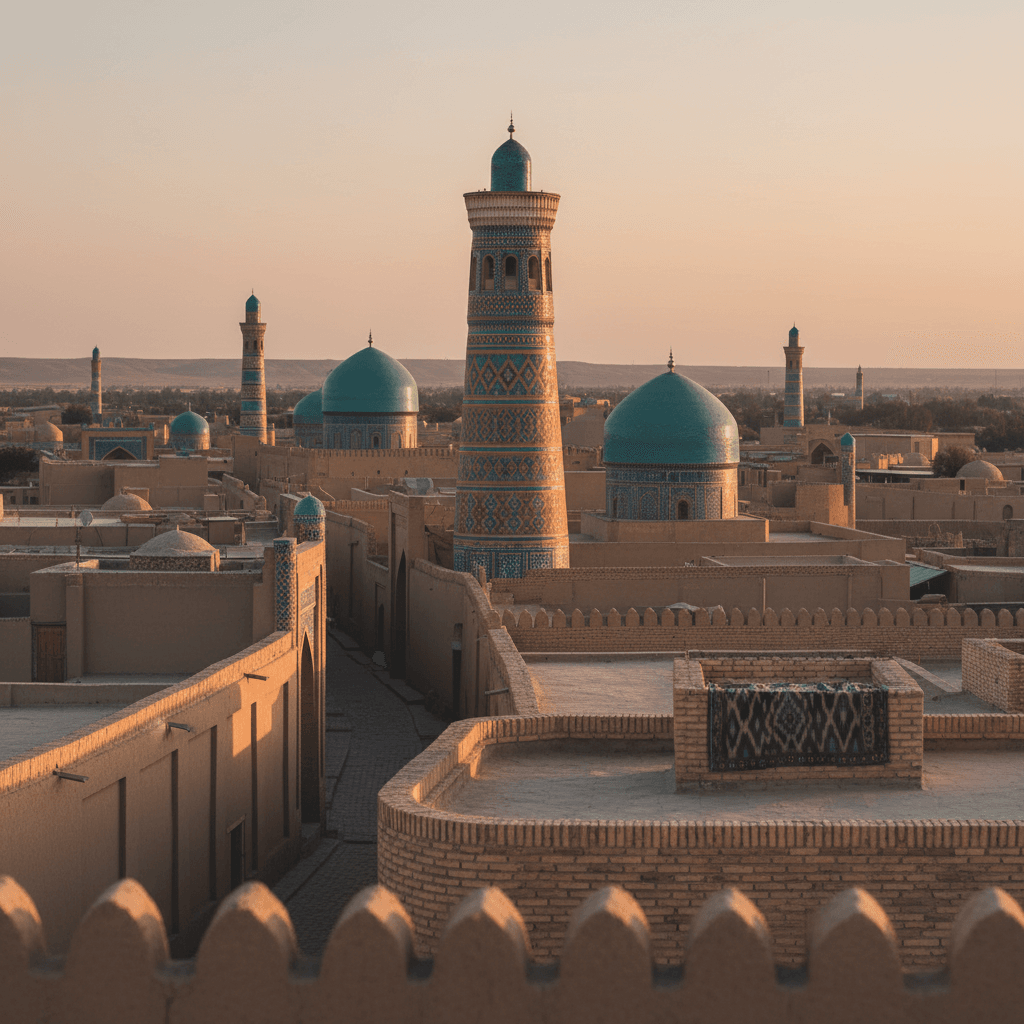
Khiva, Uzbekistan, is the one walled city in the country that still feels like a city, not a museum behind glass. The whole old town, Itchan Kala, sits inside mud-brick walls you can climb. Minarets, madrasas, and tiled portals are packed into about 26 hectares, which means you walk everywhere in minutes.
It’s far west, near the Turkmen border, so it takes effort to reach. That effort filters the crowds. By evening, when the day-trippers leave, you mostly have the lanes to yourself.
What Itchan Kala is and how the ticket works
Itchan Kala is the inner walled town. Outside the walls is Dichan Kala, the newer outer city where most hotels, taxis, and ATMs sit. The good stuff is inside.
Here’s the part that confuses people. You buy one combined ticket that covers most monuments inside the walls. It’s valid for two days, which already hints at the right amount of time to spend here.
A few sights charge separately. The Islom Hoja minaret climb and the Kuhna Ark watchtower usually want a small extra fee, paid on the spot. Keep some small so'm som notes for those.
Buy the ticket at the West Gate (Ota Darvoza), the main entrance. Hold onto it. Guards at the bigger madrasas will ask to see it.
Things to do in Khiva
The best thing about Khiva old city is that you don’t plan a route. You wander, and the monuments find you. Still, a few are worth aiming for.
- Kalta Minor: the fat turquoise minaret near the West Gate that was never finished. It’s the photo everyone takes, and for once the hype holds up.
- Islom Hoja minaret: the tall one. The climb is a tight, dark spiral with uneven steps, but the view over the rooftops is the best in town.
- Kuhna Ark: the old fortress and royal court. Climb the watchtower (Akshi-Bobo) for sunset if you can’t get up the minaret.
- Juma Mosque: a flat-roofed hall held up by 200-plus carved wooden columns, some over a thousand years old. Cool and quiet on a hot afternoon.
- Tosh Hovli Palace: the 19th-century khan’s residence, with some of the finest tilework and carved doors inside the walls.
- Pahlavon Mahmud Mausoleum: the most sacred spot in Khiva, with deep blue tiles and locals coming to pray. Cover up and keep your voice low. If you’re unsure how to behave, skim mosque etiquette first.
Don’t rush these one after another. Khiva rewards slowness. Sit at a teahouse, order a pot of green tea, and watch the light move across the brick.
Sunset from the walls
This is the moment people remember. Walk up onto the city walls near the West Gate in the late afternoon. The whole town turns gold, then amber, then a deep rose as the sun drops behind the desert.
There’s a small fee to access some sections of the wall, and the best stretch fills up about 30 minutes before sunset. Get there early and claim a spot. Bring a layer. Once the sun’s gone, the desert air cools fast.
How to get to Khiva
Khiva doesn’t have its own real station hub. You route through Urgench, the regional capital about 35 km away.
By train: the fast and sleeper trains run to Urgench from Tashkent, Samarkand, and Bukhara. The overnight sleeper from Tashkent or Bukhara is the practical choice. You sleep, you save a hotel night, and you wake up in the west. Book ahead, since berths sell out in the spring and autumn high season. Our train survival guide covers booking and what the carriages are actually like.
From Urgench to Khiva: grab a taxi outside the station, or take the trolleybus (the line is a local oddity worth riding once). A taxi is quick. Agree the price before you get in. Qancha? kahn-CHA (how much?) is the only word you need to start. If the driver names something silly, our taxi tips explain how to push back politely.
By air: Urgench has an airport with flights from Tashkent, which saves a long overland leg. From the airport it’s a short taxi into Khiva.
Is one night enough in Khiva?
One night is genuinely enough to see Itchan Kala. The walled town is small, and you can cover the headline sights in a focused day.
But two nights is when Khiva becomes something better. With a full extra day you stop ticking off monuments and start noticing the place: the morning light before tour groups arrive, a slow lunch of shurpa, the way the lanes empty out after dinner. You also get two cracks at sunset, which matters if the first evening clouds over.
If you’re stitching together a wider trip, see how Khiva fits into our 7 and 10-day itinerary. Most people do Khiva last, working west from Samarkand and Bukhara.
Where to stay and eat
Stay inside the walls if you can. Several madrasas and merchant houses have been turned into small guesthouses, and waking up surrounded by old brick is the whole point. Rooms can be basic and cosy rather than luxurious, so set expectations.
For food, look for shashlik grilling near the gates and rooftop cafes for the view. Khiva has its own version of plov with extra raisins and chickpeas. If you’re a plov fan, ask for the local style. A simple Rahmat rah-MAHT (thank you) to the cook goes a long way.
When to go
Spring (April to May) and autumn (September to October) are best. Khiva sits in the desert, so summer afternoons get brutally hot and winter nights drop below freezing. For a month-by-month breakdown, check our best time to visit guide.
Frequently asked questions
How many days do you need in Khiva?
One full day covers Itchan Kala’s main sights. Two nights let you slow down, catch sunset twice, and enjoy the quiet evenings after day-trippers leave.
Is the Khiva ticket worth it?
Yes. The combined ticket covers most monuments inside the walls and is valid for two days. A couple of climbs (the Islom Hoja minaret, the Kuhna Ark tower) charge a small extra fee separately.
How do you get from Urgench to Khiva?
Take a taxi (quick, agree the price first) or the local trolleybus for the 35 km trip. Many travelers arrive in Urgench by overnight sleeper train or a short flight from Tashkent.
Can you walk everywhere in Khiva old city?
Yes. Itchan Kala is compact and traffic-free inside the walls, so you cover it entirely on foot in a few minutes between sights.
Khiva is easier when you can read a price, thank a host, or ask directions without fumbling. The Salom Uzbekistan app has offline Uzbek phrases and audio so the right words are there even when the signal isn’t. Have a look before you go.